6 min read

Imagine the situation. The marketing budget is spent, the contract with a top influencer is signed, and reach is breaking records. Yet, the download chart in the App Store remains stubbornly flat.
This is a classic trap of modern performance marketing. In the pursuit of million-scale audiences, it is easy to forget that beautiful numbers on paper do not always convert into real clicks and installs.
When a UA manager or product owner faces the task of scaling a mobile app, choosing promotional partners turns into a strategic dilemma. Micro vs macro influencers for app growth - which drives more installs?
On one side, the scale and instant recognition of the macro world look tempting. On the other, the niche trust and high CTR of micro-creators win you over.
Let us figure out, without unnecessary theory and complex formulas, where exactly you should invest your budget to get real conversions and downloads, rather than just likes on posts.
Influencer Tiers: Definitions
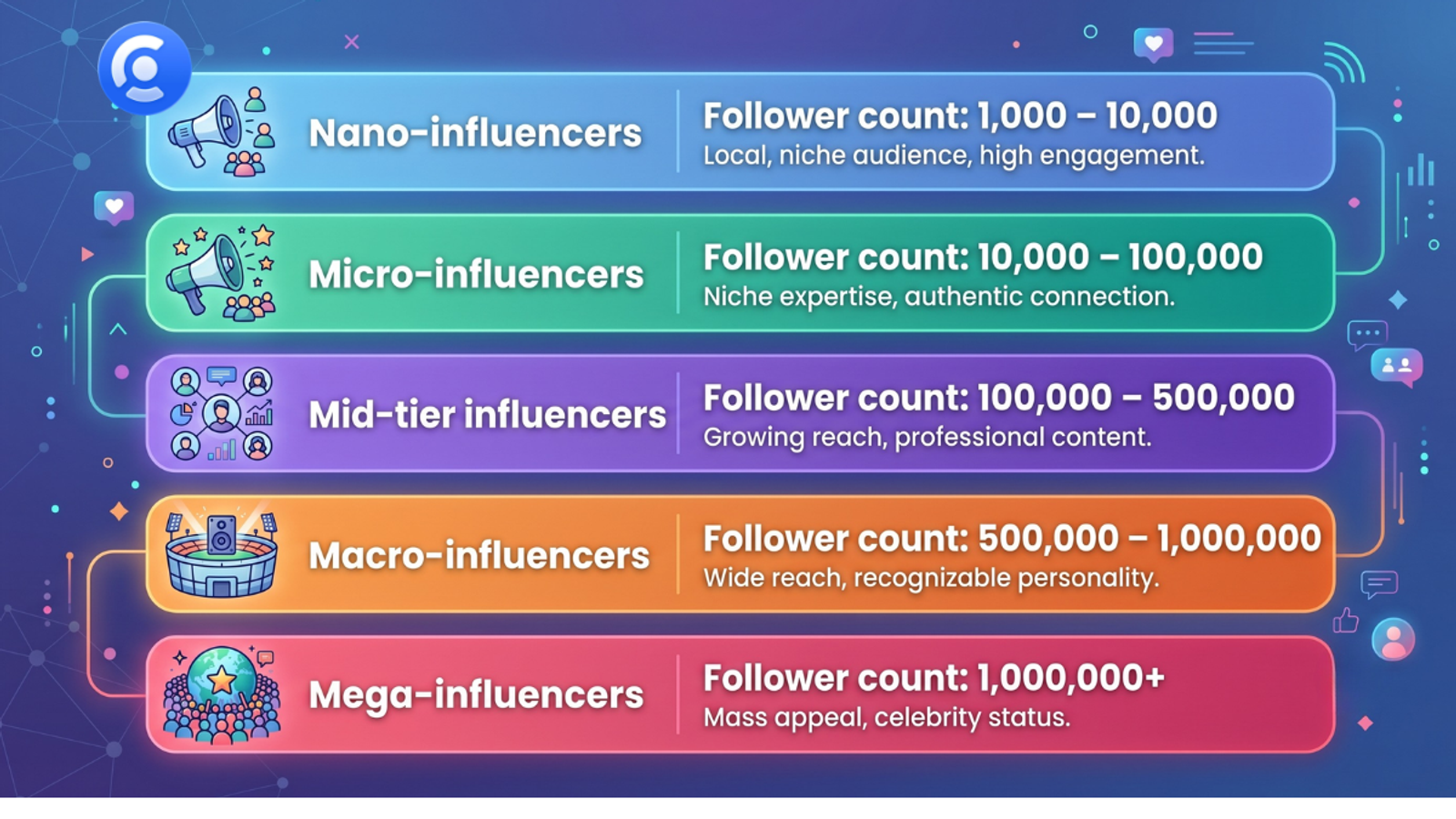
1. Nano-influencers
- Follower count: 1,000 – 10,000
- The Scoop: These creators represent grassroots influence. Despite a smaller reach, they deliver exceptional engagement rates and maintain deeply authentic connections with their audience. Because their recommendations feel like a personal word-of-mouth endorsement, they are highly valuable for niche products and local businesses.
2. Micro-influencers
- Follower count: 10,000 – 100,000
- The Scoop: Often the most cost-effective segment for brands. Micro-influencers boast deep expertise in specific niches while keeping the relatability that larger accounts often lose. Industries like fashion, fitness, beauty, and tech frequently leverage them to drive both brand awareness and direct conversions.
3. Mid-tier influencers
- Follower count: 100,000 – 500,000
- The Scoop: They bridge the gap between niche expertise and broad cultural impact. At this stage, content creation is a full-time profession, often managed by agencies. This tier offers the perfect sweet spot of reach, engagement, and credibility.
4. Macro-influencers
- Follower count: 500,000 – 1,000,000
- The Scoop: Creators who have achieved celebrity status within their domains. Their content reaches massive audiences, though engagement rates typically dip as follower counts rise. Macro-influencers are ideal for high-visibility campaigns and major product launches.
5. Mega-influencers
- Follower count: 1,000,000+
- The Scoop: This tier includes traditional celebrities, athletes, musicians, and digital-native creators with mainstream recognition. Partnerships here require substantial budgets and complex negotiations through agents and management teams.
Find more useful terms in our influencer marketing glossary.
Comparative Analysis of ROI and Conversion Metrics for Micro- vs Macro-Influencers
To understand which category of creators drives app growth better, let us look at recent analytical data from HubSpot. The main trend is obvious. The market has definitively shifted toward measurable ROI and generating quality UGC (User Generated Content).
- Average Engagement RateHere, micro-influencers hold absolute leadership with rates from 3.8% to 5.2%. For macro-creators, due to a huge and diverse audience, the ER drops significantly and stays within a modest 0.8% - 1.5%.However, looking only at likes can be misleading; smart growth managers understand why engagement is a comfort metric and why it fails at scale.
- Conversion Rate to DownloadsSmall creators demonstrate a consistently high conversion rate because audiences perceive their content as a recommendation based on personal experience. Macro-influencers show average or low results, as their content works more for general reach than for a target action.
- Cost Per Install (CPI)Working with micro-creators allows you to keep CPI 30-40% below the market average. With macro-influencers, the download cost is usually noticeably higher, as the integration price includes a large markup for the creator's brand and media status.
- Main Strategic AdvantageMicro-influencers offer brands a hyper-targeted and highly loyal community where every second person is ready to test new products. Macro-influencers, on the other hand, provide instant scale and rapid growth of brand awareness in the market.
Big brands no longer just buy a pretty picture. Modern users perceive recommendations from small creators as advice from an acquaintance. For mobile products, from fitness trackers to fintech apps, this factor becomes decisive when making a download decision.
Ось професійний, маркетинговий, але водночас легкий для сприйняття варіант перекладу. Текст адаптовано спеціально для сайту: речення структуровані так, щоб користувач міг швидко вхопити суть (scannable text).
Why Micro-Influencers Generate Higher LTV
The main trump card of micro-creators is high engagement and the natural integration of a product into their content.
When a creator with an audience of 20,000 followers shares their smartphone screen and shows how a specific AI planner helps them organize their workday, viewers do not perceive it as direct advertising.
- Precise Targeting of the AudienceYou know exactly who is watching this creator. If you are promoting a calorie-counting app, integration with a local trainer will bring significantly more downloads than a mention on a pop star's page.
- Flexibility and Risk DiversificationInstead of betting everything on a single macro-influencer, you can involve 15-20 micro-creators. This allows you to test different creative approaches, cover several audience segments, and understand which presentation drives installs best.
If a specific creative shows great results, it can safely be scaled through targeted ads via Whitelisting. Mobile games and utilities that rely on working with a pool of nano- and micro-influencers end up with a higher LTV (Lifetime Value). Users come intentionally and stay in the app longer.To truly maximize this effect, modern user acquisition teams rely on autonomous performance platforms like Creally to automate creator discovery, manage workflows, and accurately track full-funnel analytics without operational overhead.
The Strategic Role of Macro-Influencers in High-Reach Campaigns
It would be unfair to assume that big creators have lost their relevance. They simply fulfill a completely different role in marketing strategy. Macro-influencers are your tool for quickly building Brand Awareness.
- Quick Start EffectIf you are launching a new product on the market and need hundreds of thousands of people to find out about it in one day, small creators will take too long. A big influencer provides instant visibility.
- Powerful Social ProofWhen an app appears in a review by a well-known influencer, it automatically increases the credit of trust in the brand. Users are more willing to look for the product in the App Store or Google Play because the name is already familiar.
One big contract also significantly saves the team's time on communication, brief approvals, and process management. Instead of dozens of email threads, you work with one creator or their agency.
How to Balance Micro- and Macro-Influencers for Maximum Business Growth
In the competition of micro vs macro influencers for app growth - which drives more installs, there is no universal answer. The choice depends on your current KPIs, budget, and stage of app development.
When to Choose Micro-Influencers
- Your budget is strictly limited, and you focus exclusively on cost per download (CPI).
- The product has a specific niche, such as B2B tools, crypto, or narrow-profile utilities, where it is important to explain the value and functionality to the user in detail.
- Your goal is stable and predictable conversion over a long distance.To execute this efficiently, learning how to find TikTok creators for your app in a systematic, data-driven way is essential for steady scaling.
When to Choose Macro-Influencers
- You are entering a large new market and want to make a loud statement about yourself.
- The product is designed for the widest audience, such as delivery services, taxi booking, or entertainment social networks.
- The main task of the marketing campaign at this stage is to increase overall brand awareness and status.
Conclusion
The most effective strategy for many successful products today remains a hybrid approach.
Macro-influencers create the first wave of interest and information buzz. Meanwhile, micro-creators pick up the audience, demonstrate real product use cases, and help make that very final click that leads to a download.