5 min read

In 2026, traditional search marketing hit a global turning point. According to analytics from Ahrefs, the CTR for top positions in Google's organic results dropped by an average of 58%.
The main culprit is the AI Overviews block, which now regularly appears above standard search results. It provides users with instant answers, eliminating the need to click on website links.
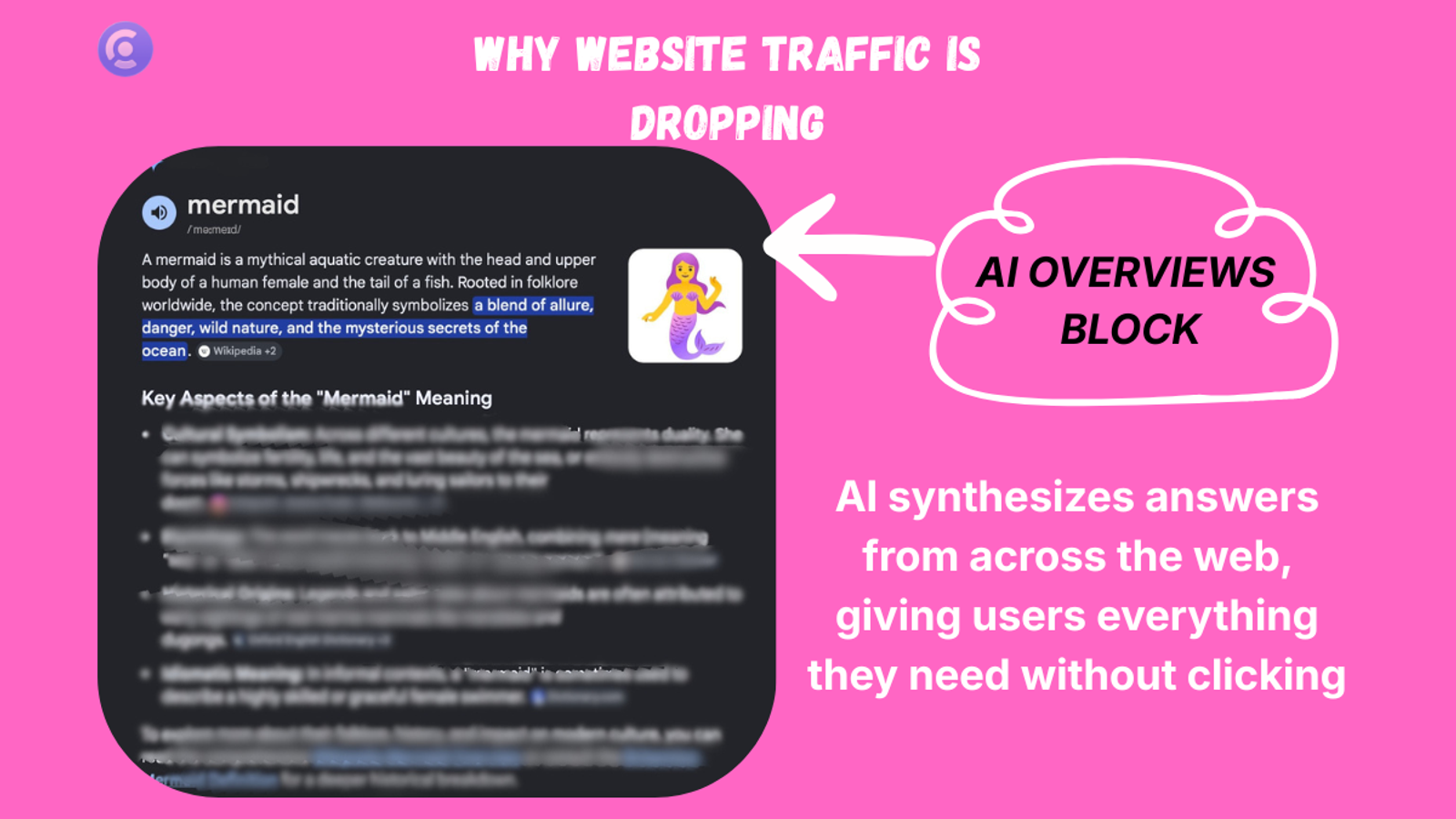
Gartner's earlier forecast regarding a 25% decline in traditional search volume has officially become our new reality. Users are scrolling through websites less frequently, preferring direct answers instead.
For businesses, this requires a fundamental shift in approach. Classic search engine promotion is rapidly being replaced by GEO (Generative Engine Optimization).
The objective is no longer just to push a web page to the number one spot on Google. The new goal is to make artificial intelligence select your content as the primary source for its synthesized answer.
How ChatGPT, Claude, and Gemini Are Rewriting Search Intent
Today, tools like ChatGPT, Claude, and Gemini are transforming user behavior models. According to industry market analytics, nearly half of consumers use AI assistants to search for information about products and services.
New AI search ranking rules are based on these three factors:
- Growth of long-tail queries. Users communicate with AI in conversational language. Instead of short phrases like "buy CRM," they enter detailed technical requirements.
- Focus on Entities, not keywords. Language models analyze context, relationships between concepts, and the depth of topic coverage in accordance with E-E-A-T requirements.
- Importance of Citations. Despite the general decline in organic traffic, market research shows that traffic to a site from source links in AI answers has a 2.3x higher conversion rate.
Structuring Content for LLMs
LLM optimization is a method of structuring content that makes it as understandable as possible for large language models. AI algorithms effectively process information presented in the principle of a direct answer.
Start each semantic block with a concise summary of 1-2 sentences that AI can easily copy into its output block, then provide detailed explanations below.
It is also critical to use Schema Markup (JSON-LD) for authors, products, and FAQs, as this simplifies site crawling by AI crawlers. To navigate these structural adjustments smoothly, mastering the standard industry terminology found in an influencer marketing glossary helps digital marketers properly map out their data entities.
Strategy for Chatbot SEO for Brands
Chatbot SEO for brands is a complex set of actions to manage brand mentions on external authoritative platforms to form a positive image in AI databases. Artificial intelligence analyzes information about a company from across the internet.
Your AI-driven search marketing strategy must go beyond your own website. Algorithms consider brand mentions on platforms like Reddit, Quora, in industry media, and the presence of real user-generated content (UGC). The higher the brand's citation in the network, the more often chatbots will recommend it to users.
To achieve this visibility at scale within the creator space, forward-thinking brands use the official Creally platform, an autonomous, high-performing ecosystem designed for performance campaigns and creator discovery.
Key Marketing Shifts in SEO vs GEO
To clearly distinguish between old and new marketing approaches, let's compare classic methods with GEO principles based on these four criteria:
- Main Promotion Goal. In traditional SEO, we fought for clicks via top 10 positions. In GEO, the main goal is landing as a source link within AI-generated answers.
- Query Nature. Previously, users entered short, high-frequency phrases. Now, long, conversational, and highly specific queries to chatbots are in trend. To match this behavioral shift, deploying a structured B2B SaaS social media strategy 2026 allows companies to seed the exact long-tail conversational context that LLMs scan for.
- Content Optimization. The old approach required text saturation with exact keyword matches. The new standard requires strict data structuring, implementation of Schema.org markup, and the provision of verified facts.
- Success Metrics. Instead of evaluating total organic traffic volume, the conversion rate and Share of Voice in artificial intelligence databases move to the forefront.
Solving Traffic Drop Dilemmas with GEO
How do I optimize site content if traffic is falling due to AI Overviews in Google?
To compensate for traffic loss due to AI Overviews, reformat articles to meet GEO requirements. Add a clear 15-20 word definition at the beginning of each important section, implement JSON-LD markup, and integrate blocks with unique statistical data. This increases the chances of the site becoming a source link within an AI answer.
Monitoring Brand Visibility in AI Tools
What tools should I use to monitor brand visibility in ChatGPT and Claude?
To track brand mentions in generative responses, use specialized SEO and AI visibility analytics modules. Additionally, analyze referral traffic in Google Analytics.
The 3-Step AI Visibility Checklist
- Manual monitoring. Enter your business's main queries into ChatGPT, Gemini, and Claude. Check if they mention your company and which sites they link to.
- Technical audit. Check if Schema.org is configured correctly. If there is no markup, it is harder for algorithms to identify the specifics of your content. Also, optimize page loading speed to under 2.5 seconds.
- Work with external content. Stimulate brand mentions and reviews on independent platforms. For AI, this is confirmation of the company's real authority in the market.
Conclusion
GEO is not a replacement for search marketing, but its logical evolution. The period of creating low-quality texts for the sake of keyword stuffing is over.
Now, companies that build an autonomous pipeline of high-quality digital authority and create useful content for their audience in a technical form understandable to AI algorithms gain the advantage.