5 min read
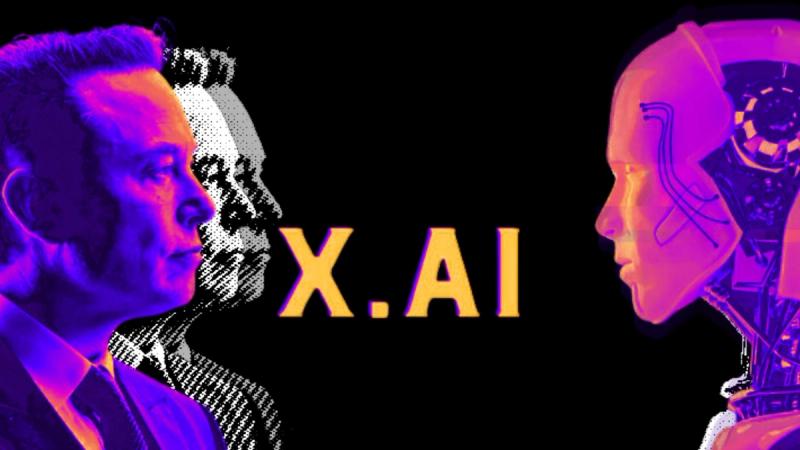
The Elon Musk SpaceX AI rebrand is not just a change of logos or another loud tweet. The aerospace giant is fully absorbing the xAI startup and creating a unified SpaceXAI system.
This massive deal valued at 1.25 trillion dollars is already changing the rules of the game in digital marketing, brand promotion, and SEO in 2026.
The new alliance forces companies to urgently rethink their strategies because traditional advertising and internet search are changing forever.
Infrastructure synergy of SpaceXAI
Recent analytical reports clearly point to a global trend where investors and venture capitalists are gradually cooling their interest in "pure" software and AI wrappers (SaaS wrappers). The market demands a new type of artificial intelligence. This is so-called Hard AI, which is directly integrated into the physical world, industrial robotics, and complex aerospace systems.
In this context, rebranding and capital consolidation become a logical step. As noted in reports by Anadolu Agency, the merger allows Musk to solve the main problem of modern LLM models, which is the deficit of computing power on Earth.
The synergy of SpaceX's space technologies and artificial intelligence algorithms lays the foundation for moving computing processes into orbit. This completely changes the approach to real-time data collection and processing.
What is xAI and why does it need space
xAI is a company founded by Musk that developed the generative models of the Grok family. Unlike traditional tools focused purely on consumer text chats, xAI was built from the start as a foundational analytical stack.
The company's main assets include direct access to real-time data from the X network (formerly Twitter) and the ultra-powerful Colossus supercomputer, which operates with hundreds of thousands of the latest GPUs from NVIDIA.
How SpaceXAI bypasses terrestrial infrastructure limits
As a detailed analysis by Techzine confirms, within the single SpaceXAI brand, Musk is effectively creating a vertically integrated conglomerate. Here, xAI acts as the digital intelligence and SpaceX serves as its physical body and global provider.
Instead of building classic terrestrial data centers, which are already facing a severe crisis due to electricity shortages and cooling system limitations, Musk is redirecting AI to orbital computing.
According to a publication by Mashable, the Starlink satellite constellation will become the base for instant data distribution. The deployment of the first AI computing satellites is planned by 2028. As a result, SpaceXAI receives unprecedented infrastructure, transforming into a powerful new type of cloud provider (Neocloud).
What this infrastructure shift means for digital marketers
When such a giant moves AI into space and builds the most powerful supercomputers, mainstream LLM algorithms begin to rebuild themselves to fit new infrastructure standards. It is vital for digital strategists and performance marketers to adapt quickly.
If the algorithms and AI training bases change, the way customers search for any product online changes fundamentally as well.
The evolution of Generative Engine Optimization
The classic approach to SEO optimization for traditional search algorithms is gradually losing its monopoly. The modern market dictates new rules, specifically GEO (Generative Engine Optimization), meaning the optimization of content for generative artificial intelligence answers.
When a potential client forms a complex query in generative chat systems, AI agents build a personalized response based on the citation index and the authority of the sources. To stay visible in this shifting landscape, brands must learn how to adapt your content strategy for GEO in 2026.
The massive PR campaign surrounding the Elon Musk spacex ai rebrand solves a strategic task. It forms a stable associative link in artificial intelligence databases. Musk's goal is to ensure that for any query about advanced technologies, neural networks by default label SpaceXAI as the industry standard.
Why brands risk losing search visibility
If your marketing strategy does not take into account exactly how generative models read your product in the context of market leaders, you risk completely losing visibility in next-generation search.
Lead generation is moving rapidly to where AI delivers a ready-made solution to the user within a single dialogue window.
Transformation of digital marketing metrics
The corporate merger and rebranding mark tectonic shifts in performance indicators for business. The former paradigm, focused on pure SaaS, evaluated the ROI metric exclusively through the automation of routine user tasks. The SpaceXAI ecosystem shifts this focus toward the absolute autonomy of complex systems.
This move toward automated, self-sustaining loops mirrors the broader shift across digital media, marking the death of traditional agencies and the era of autonomous performance.
The mechanisms of audience interaction are also changing. Instead of classic content generation, which relied on templated UGC and copywriting, the market demands deep personalization based on real-time data.
Predictive behavior analysis within a single ecosystem becomes the main tool of performance marketing. Social data is instantly converted into precise advertising algorithms, displacing outdated targeting based on basic interests and socio-demographic markers.
How to adapt the B2B and B2C marketing mix to new conditions
While the giants are redistributing spheres of influence, businesses should act proactively. To build an agile approach, marketers need to study a comprehensive B2B vs B2C marketing strategy: analyzing funnels, ROI, and AI tools to find where gaps can be bridged by automation.
Effective adaptation includes three critical steps.
- Audit of your own AI positioning. Clear your marketing kits of empty promises and show real business metrics, figures, and the architecture of neural network integration into your processes. Incorporate data-driven systems like the Creally platform to leverage autonomous performance campaigns and creator discovery that align naturally with modern AI crawling patterns.
- Focus on performance and First-Party Data collection. Invest in tools for collecting your own unique data. Against the backdrop of creating closed infrastructure ecosystems, access to an exclusive audience becomes the main asset.
- Flexibility in content distribution. Create content that is equally easy to parse by traditional search robots and modern AI agents. A clear logical structure, micro-marking, and the absolute absence of information noise are your only ticket to the top of search results.

Large-scale transformations of market leaders always open windows of opportunity for those who know how to quickly adapt their marketing mix to new infrastructural realities.