4 min read
The Cost of Broken Analytics: Why Influencer Traffic Disappears
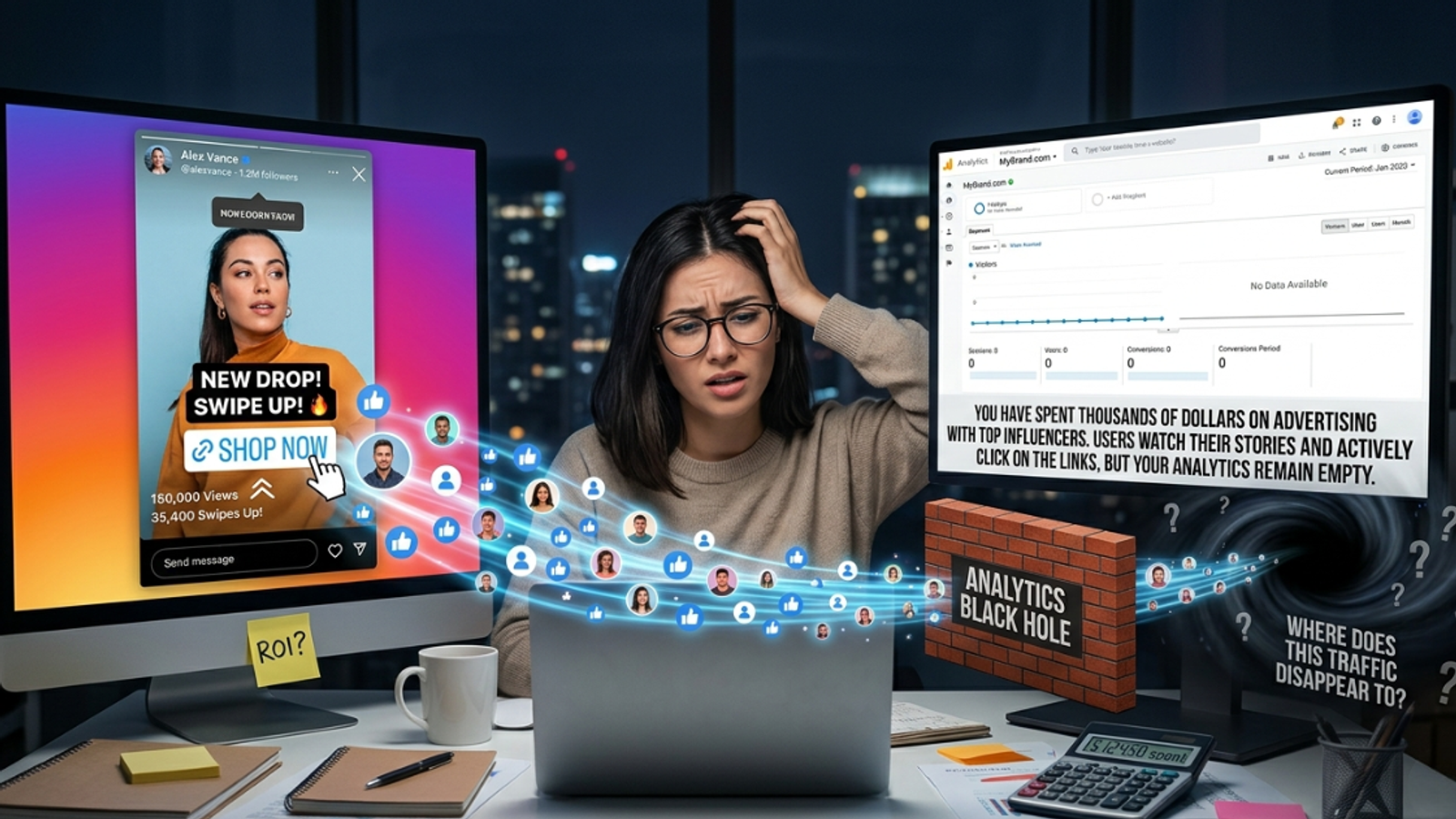
Imagine this: you have spent thousands of dollars on advertising with top influencers. Users watch their Stories and actively click on the links, but your analytics remain empty. Where does this traffic disappear to?
Today, there is a "silent war" going on in mobile marketing. On one hand, social media in-app browsers disrupt the user journey, causing you to lose up to 90% of potential buyers. On the other hand, Apple continuously tightens privacy rules, rendering old tracking methods obsolete.
This guide is for those who want to stop this "leak" of money and set up precise tracking in 2026.
What you will learn:
- How to "befriend" social media links with your app so you don't lose your audience halfway through.
- What Deferred Deep Links are and how they provide a "seamless" user experience.
How to migrate to AdAttributionKit (Apple’s new standard for iOS 18.4+), which has replaced SKAdNetwork and works even with alternative app marketplaces.
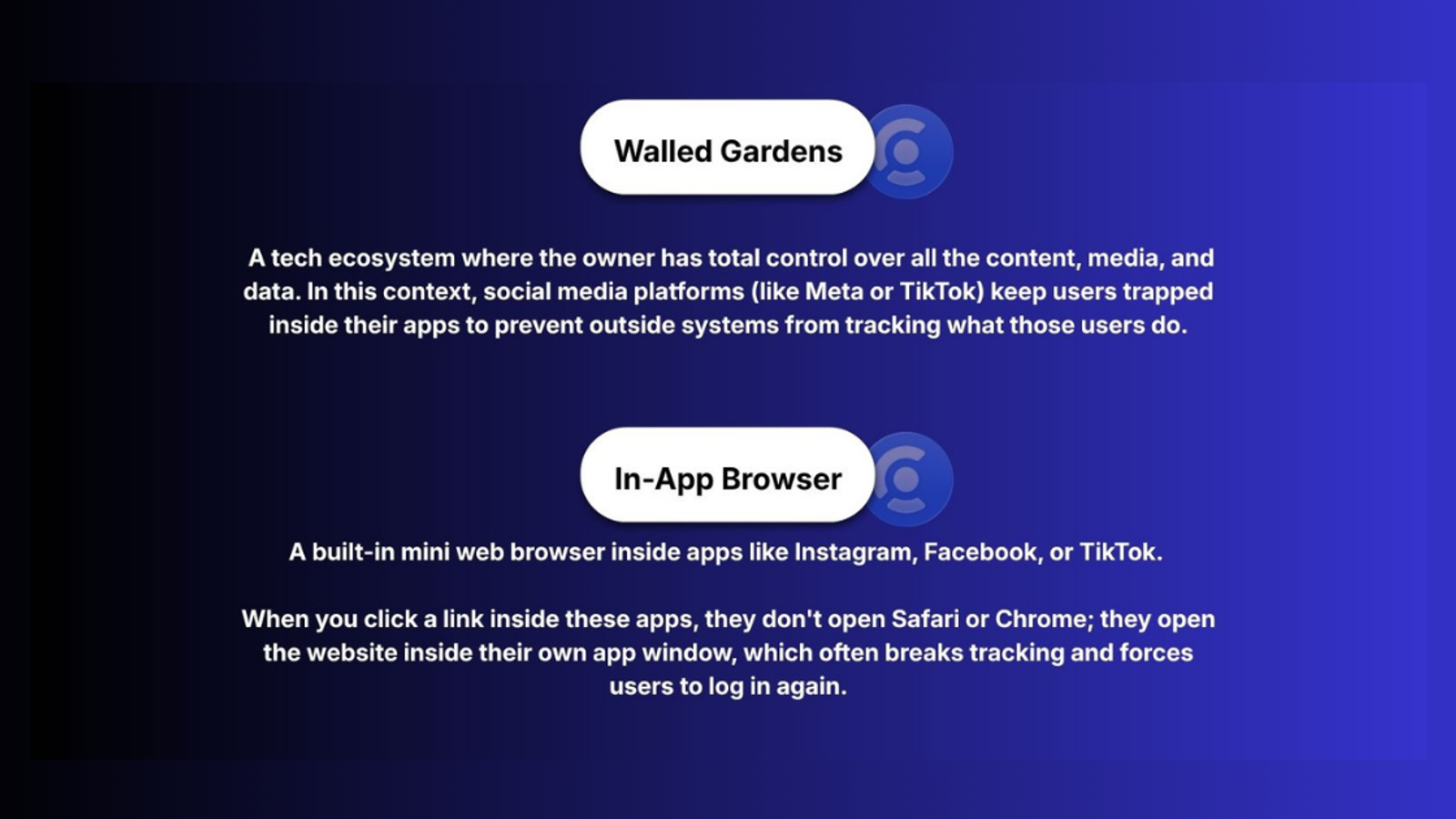
The Walled Gardens Effect: Why In-App Browsers Kill Mobile Conversions
When a user clicks on a link in Instagram or TikTok, they do not immediately switch to the Safari or Chrome browser. The social network opens its own "window" an in-app browser.
This creates a problem known as Walled Gardens.
How Social Media Links Block Your App Tracking
- Navigation blocking. When the system detects a link inside a social network, it launches it via its internal component (WKWebView).
- Extra step. Instead of automatically opening your app, the user lands on the mobile web version of the site.
- Loss of conversion. The user is usually not logged in on the website. They are too lazy to enter a password, they don't see the buttons they are used to and they simply close the page. This is how you lose 90% of potential clients.
Solving the Leak: How Branded Smart Landing Pages Restore the User Journey
To prevent the user from getting "stuck" in the social media browser, marketers use an intermediate page (or a Branded Smart Landing).
The secret is simple:
When a user clicks on an influencer's link, they land on a lightweight landing page that "understands":
- Is your app already installed on the user's device?
- Where exactly did the click come from?
Instead of trying to force the user into the app (which is blocked by the system), we offer them a clear "Open in App" button. This is a safe path that the iOS system perceives favorably, and the user smoothly ends up where they need to be in your app, ready to make a purchase.
Next-Gen Tracking: Deep Links vs. Deferred Deep Links
To ensure the user doesn't get lost on the way from the influencer to your app, two technologies exist:
- Deep Links. If the app is already installed, the link simply opens the required screen (e.g., a specific product page, rather than the main menu).
- Deferred Deep Links. If the app is not yet installed, the link first leads to the App Store or Google Play. The user installs the app, opens it, and magic! they are immediately taken to the specific product.
How Deferred Deep Linking Works (Step-by-Step)
- The Click. You record that the user clicked on the influencer's link.
- The Store. If the app is missing, the system sends the person to download it.
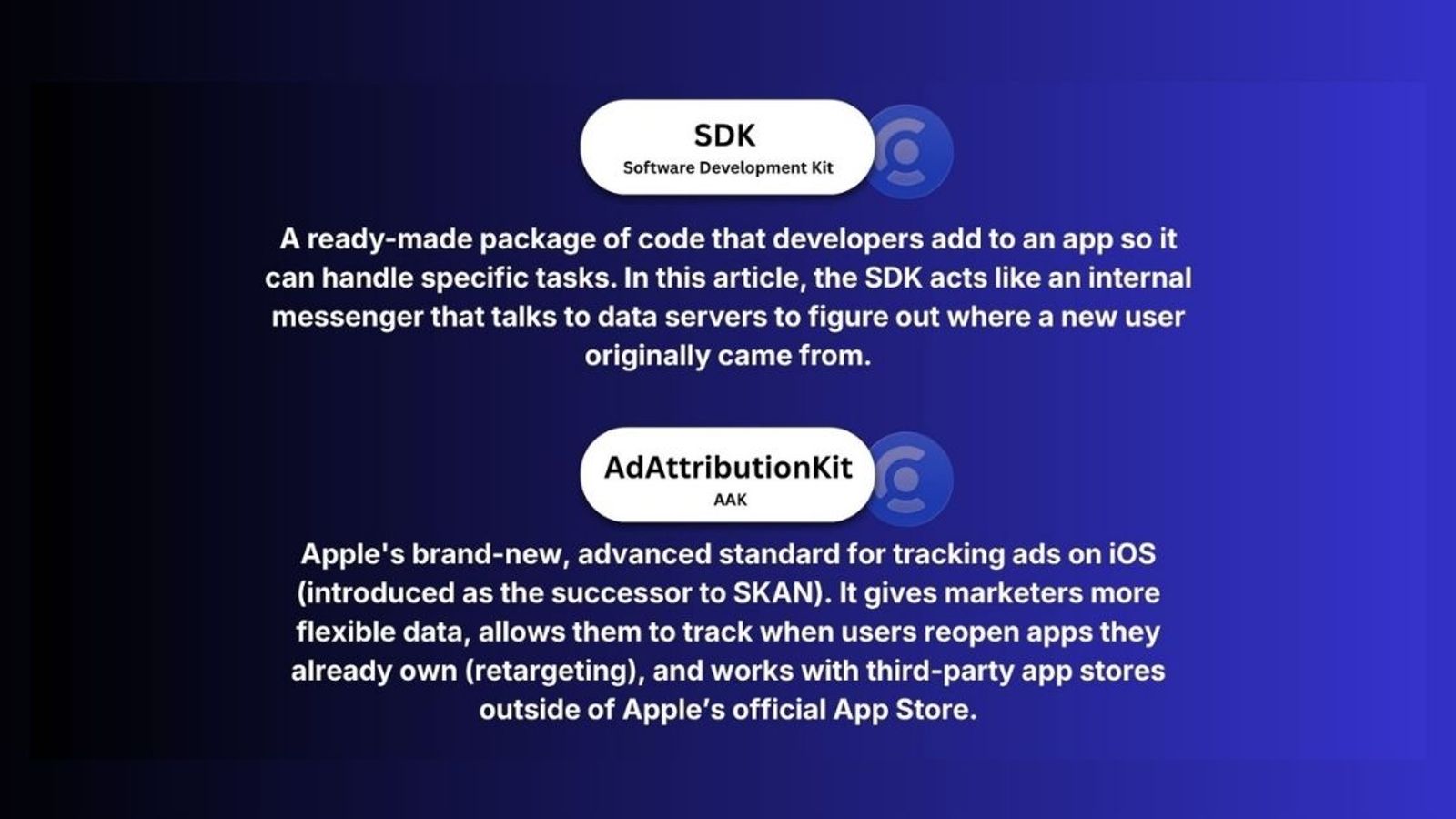
- The SDK. After installation, your app's internal code asks the server: "Who is this user and where did they come from?" The server "remembers" the previous click and directs the user exactly where they need to go.
The evolution of tracking: from SKAN to AdAttributionKit
Previously, marketers could "see" every user via their ID (IDFA). Now, Apple forbids this for privacy reasons, so we are transitioning to AdAttributionKit (AAK).
What’s New in AdAttributionKit for iOS 18.4+
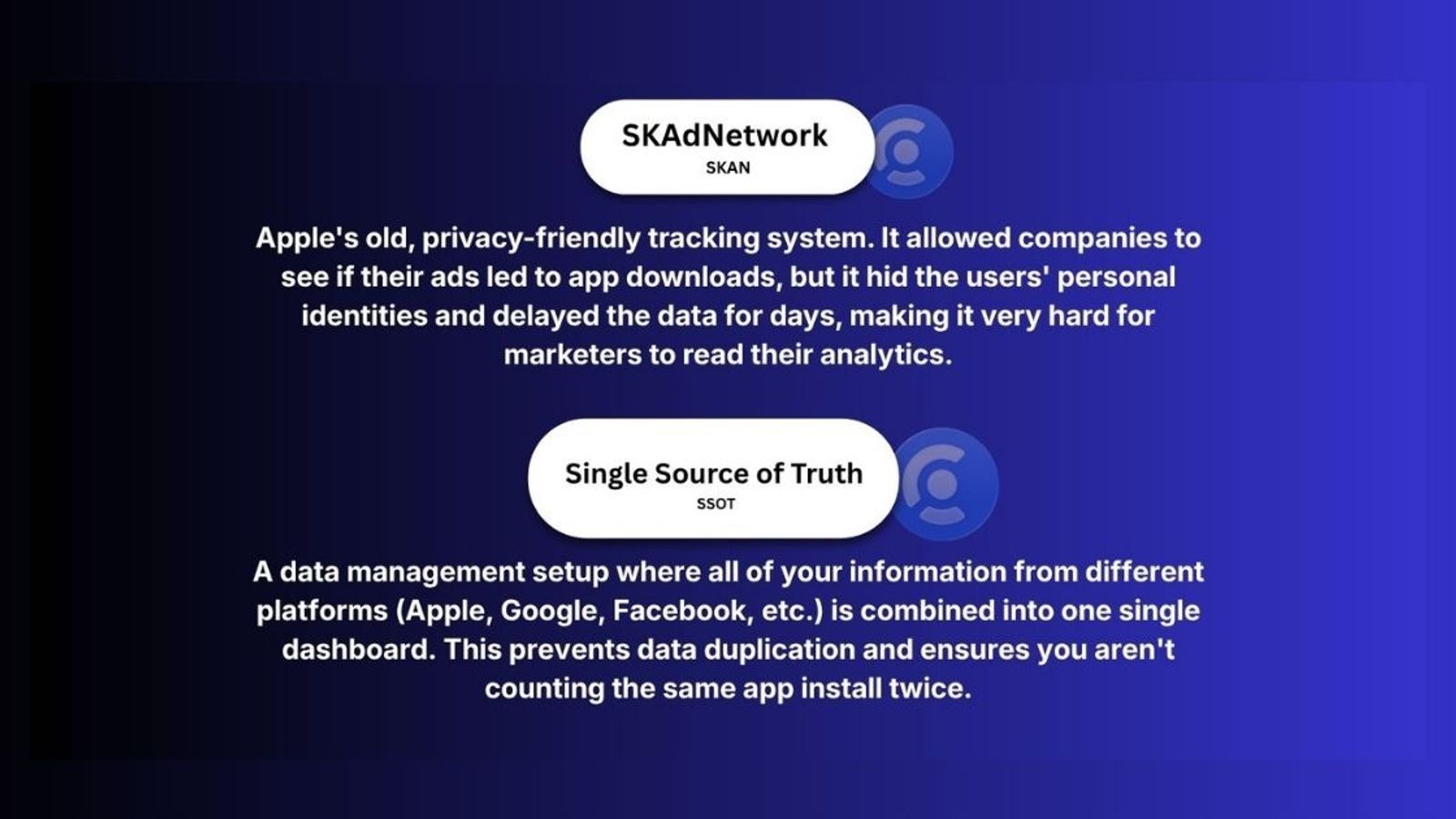
SKAN 4.0 was the old standard where data arrived with significant delays and was grouped according to complex "crowd anonymity" rules.
AdAttributionKit (AAK) is a new level. It works not only with the App Store but also with alternative app marketplaces in the EU.
Key features of AAK in 2026:
- Retargeting. Now you can track not just new installs, but also the return of "old" users who already have the app.
- Flexibility. In 2026, new options have appeared for example, you can configure attribution "windows" and easily test everything in Developer Mode.
The Ultimate Mobile Marketing Checklist for 2026
If you want your analytics to be precise, here is what you should do right now:
- Migrate to AAK. Ensure your developers have set up the receipt of postbacks (reports) for both the old SKAN and the new AAK.
- Forget about direct links. Never insert "naked" download links on social media. Use Branded Smart Landing Pages.
- Use lockWindow. This will help you get data on purchases faster.
- Create a "Single Source of Truth" (SSOT). Use professional MMP services that know how to combine data from different sources into one clear picture.
Discover more industry insights and actionable guides on the Creally Blog.
Dictionary