
Huge Influencer Marketing Glossary: Metrics, Roles, and Workflow Terms Explained

66 Must-Know Influencer Marketing Terms for Brands and Agencies
This comprehensive glossary decodes the complete language of influencer marketing, from fundamental influencer classifications and essential performance metrics to advanced engagement analytics, legal compliance terms, and emerging industry concepts.
Whether you're launching your first campaign or optimizing existing strategies, understanding these 80+ terms transforms influencer marketing from guesswork into strategic, measurable business outcomes. Master the vocabulary that bridges authentic creator relationships with data-driven ROI.
Influencer marketing has evolved into a sophisticated, data-driven discipline with its own specialized vocabulary. This comprehensive guide breaks down the metrics, roles, and workflow terms essential for campaign success.
Understanding the Influencer Landscape
Before diving into metrics and technical terms, it's important to understand the fundamental classification of influencers themselves. The influencer ecosystem is typically segmented by audience size, though these boundaries continue to evolve as platforms mature.
1. Nano-influencers
Represent the grassroots level of influence, typically commanding audiences between 1,000 and 10,000 followers. Despite their smaller reach, nano-influencers often deliver exceptional engagement rates and maintain deeply authentic relationships with their communities. Their recommendations carry the weight of personal endorsement, making them particularly valuable for niche products and local businesses.
2. Micro-influencers
Occupy the 10,000 to 100,000 follower range and represent perhaps the most cost-effective segment for many brands. They've built substantial expertise in specific niches while maintaining the relatability and engagement that larger influencers sometimes sacrifice for reach. Fashion, fitness, beauty, and technology sectors frequently leverage micro-influencers for their ability to drive both awareness and conversion.
3. Mid-tier influencers
Span from 100,000 to 500,000 followers and bridge the gap between niche expertise and broader cultural impact. They've typically professionalized their content creation and often work with management or have established relationships with brands. This tier offers a balance of reach, engagement, and credibility.
4. Macro-influencers
Command audiences between 500,000 and one million followers and have achieved celebrity status within their domains. Their content reaches substantial audiences, though engagement rates typically decline as follower counts increase. Macro-influencers are valuable for brand awareness campaigns and product launches requiring significant visibility.
5. Mega-influencers
Exceed one million followers and include traditional celebrities, athletes, musicians, and digital-native creators who've achieved mainstream recognition. Partnerships at this level involve substantial investment and often require complex negotiations through agents and management teams.
Core Performance Metrics
The measurement framework for influencer marketing combines traditional advertising metrics with social media-specific indicators. Understanding these metrics allows marketers to evaluate campaign performance objectively and optimize future initiatives.
6. Reach
Represents the total number of unique users who see content, providing a foundational measure of potential audience exposure. While reach indicates how many people could have seen your message, it doesn't confirm actual attention or engagement. Platforms calculate reach differently, and distinguishing between organic reach and paid reach helps marketers understand the true amplification of their content.
7. Impressions
Count the total number of times content is displayed, regardless of whether it was clicked or engaged with. A single user might generate multiple impressions by viewing the same content repeatedly. The impressions-to-reach ratio helps identify how often your content is being shown to the same users, which can indicate both content resonance and potential audience fatigue.
8. Engagement Rate
Stands as perhaps the most critical metric in influencer marketing, measuring the level of interaction content receives relative to audience size. The standard calculation divides total engagements by followers and multiplies by 100 to express a percentage. However, more sophisticated approaches calculate engagement rate against reach rather than followers, providing a clearer picture of actual content performance. Engagement encompasses likes, comments, shares, saves, and other platform-specific interactions.
9. Cost Per Engagement (CPE)
Divides total campaign spend by the number of engagements generated, allowing brands to understand the efficiency of their investment in driving interaction. CPE provides a standardized metric for comparing influencer performance across different audience sizes and platforms.
10. Cost Per Mille (CPM)
Or cost per thousand impressions, adapts traditional advertising measurement to influencer campaigns. This metric helps brands compare influencer marketing efficiency against other digital advertising channels and evaluate whether influencers provide competitive reach relative to their compensation.
11. Click-Through Rate (CTR)
Measures the percentage of users who click on a link within influencer content, typically directed to a landing page, product page, or other brand destination. CTR serves as a bridge metric between engagement and conversion, indicating content's ability to drive action beyond the social platform itself.
12. Conversion Rate
Tracks the percentage of users who complete a desired action after engaging with influencer content, whether making a purchase, signing up for a newsletter, downloading an app, or another campaign objective. Attribution becomes complex in influencer marketing, as the customer journey often spans multiple touchpoints across different platforms and timeframes.
13. Return on Investment (ROI)
Quantifies the financial return generated by influencer marketing spend. While seemingly straightforward, calculating true ROI requires accounting for both direct revenue attributable to campaigns and indirect benefits like brand awareness, audience growth, and content assets created. Many brands supplement financial ROI with Return on Ad Spend (ROAS), which specifically measures revenue generated per dollar spent on advertising.
14. Earned Media Value (EMV)
Attempts to quantify the equivalent advertising value of influencer-generated content and engagement. EMV calculations apply monetary values to impressions, engagements, and other interactions based on what similar exposure would cost through paid advertising. While EMV provides a useful framework for communicating influencer marketing value to stakeholders familiar with traditional advertising, the methodology remains somewhat controversial and varies significantly across measurement platforms.
15. Share of Voice
Measures your brand's presence within influencer content relative to competitors, providing context for campaign performance. This metric helps brands understand their position in the influencer landscape and identify opportunities for increased investment or different creative approaches.
Advanced Engagement Metrics
Beyond basic engagement counts, sophisticated marketers track qualitative and sentiment-based metrics that reveal deeper audience responses.
16. Sentiment Analysis
Evaluates whether comments, shares, and other textual responses express positive, negative, or neutral attitudes toward the brand or campaign. Natural language processing tools can analyze thousands of comments to provide aggregate sentiment scores, helping brands identify potential issues or unexpected positive responses requiring amplification.
17. Save Rate
Has emerged as a particularly valuable metric, especially on Instagram, where saves indicate users find content valuable enough to reference later. High save rates often correlate with educational, inspirational, or practical content that delivers lasting value beyond momentary entertainment.
18. Story Completion Rate
Measures the percentage of viewers who watch Instagram or Snapchat Stories from beginning to end, providing insight into content quality and audience interest. Drops at specific points in a Story sequence can identify less compelling segments that might benefit from editing or restructuring.
19. Audience Growth Rate
Tracks how influencer partnerships impact your brand's own social following, measuring the spillover effect of influencer exposure. While not every campaign aims to grow your owned channels, consistent follower increases indicate successful audience alignment and transfer of trust from influencer to brand.
Content and Creative Terms
The language of content creation in influencer marketing reflects the unique nature of this hybrid between advertising and authentic storytelling.
20. Branded Content
Refers to material created by influencers that features or mentions a brand, typically through a paid partnership. Platforms like Instagram and Facebook require creators to use specific tools to disclose these relationships, ensuring transparency while providing brands with enhanced analytics.
21. User-Generated Content (UGC)
Encompasses content created by customers or fans rather than the brand or professional influencers. Many brands incorporate UGC strategies alongside influencer marketing, encouraging customers to share their experiences and occasionally featuring exceptional creators in official campaigns.
22. Whitelisting or Amplification
Allows brands to run paid advertisements using an influencer's social media account and content. This strategy combines the authenticity of influencer content with the targeting and scale of paid advertising, often delivering superior performance compared to traditional brand-created ads. The practice requires explicit permission and additional compensation for influencers, as their likeness and platform are being used beyond organic posting.
23. Gifting
Involves sending products to influencers without requiring or formally requesting content in return. While some influencers do create content about gifted products, brands cannot mandate this without establishing a formal partnership and providing compensation. Gifting serves as both a relationship-building tool and a way to seed products with potential long-term partners.
24. Briefs or Creative Briefs
Outline campaign expectations, deliverables, key messages, brand guidelines, and other essential information influencers need to create appropriate content. Effective briefs balance providing necessary direction with allowing creative freedom that maintains the influencer's authentic voice.
25. Moodboards
Compile visual references that communicate desired aesthetic, tone, and style for influencer content. Particularly common in fashion, beauty, and lifestyle campaigns, moodboards help align creative vision without dictating specific execution.
26. Content Pillars
Represent the core themes or topics that define an influencer's content strategy and brand positioning. Understanding an influencer's content pillars helps brands identify authentic partnership opportunities where product integration feels natural rather than forced.
💙 Less inbox chaos. More closed deals. Creally automates discovery, outreach, and negotiations so you can 4x your signed partnerships without scaling your team! See how Creally works: https://collections.creally.io/
Campaign Structure and Workflow
Influencer marketing campaigns follow established workflows that help ensure smooth execution and optimal results.
27. Discovery or Influencer Identification
Represents the initial phase of finding creators whose audience, content, and values align with campaign objectives. This process combines data analysis of audience demographics and engagement metrics with qualitative assessment of content quality, brand safety, and authentic fit.
28. Vetting
Involves thoroughly evaluating potential influencer partners through audience analysis, engagement authenticity verification, content history review, and background research. Sophisticated vetting identifies fake followers, engagement pods, and other fraudulent practices that can undermine campaign effectiveness.
29. Outreach
Encompasses the initial contact and pitch to influencers, whether conducted directly by brands or through agencies and platforms. Effective outreach personalizes communication, clearly articulates campaign vision and compensation, and respects influencers as professional partners rather than advertising channels.
30. Negotiation
Establishes the terms of partnership including compensation structure, deliverables, timeline, usage rights, exclusivity provisions, and performance expectations. Clear negotiation prevents misunderstandings and establishes professional working relationships.
31. Contracting
Formalizes the partnership through legal agreements that protect both parties and ensure regulatory compliance. Contracts should address content ownership, usage rights, disclosure requirements, performance metrics, payment terms, and provisions for campaign modifications or cancellations.
32. Content Approval
Workflows vary significantly across campaigns, from complete creative freedom to multi-stage review processes. Finding the right balance maintains brand standards while preserving the authentic voice that makes influencer content effective. Many successful campaigns use a collaborative approach where influencers submit concepts for feedback before final production rather than brands reviewing finished content.
33. Publishing
Follows agreed timelines and platform specifications, with coordination becoming particularly important in multi-influencer campaigns where timing creates collective impact or avoids saturation.
34. Monitoring
Tracks content performance in real-time, allowing brands to identify breakout performers, address issues quickly, and gather insights that inform optimization during and after campaigns.
35. Reporting
Synthesizes campaign data into actionable insights, measuring performance against objectives and extracting learnings that improve future initiatives. Comprehensive reports balance quantitative metrics with qualitative observations about creative approaches, audience responses, and unexpected outcomes.
Legal and Compliance Terminology
The regulatory landscape surrounding influencer marketing has matured significantly, creating essential compliance terminology.
36. FTC Guidelines
Establish the Federal Trade Commission's requirements for disclosure of material connections between brands and influencers. These guidelines mandate clear and conspicuous disclosure whenever there's a commercial relationship that might affect the credibility of endorsements. While U.S.-specific, FTC guidelines influence global best practices.
37. Disclosure
Refers to the explicit statement indicating a commercial partnership between influencer and brand. Effective disclosure uses clear language like "ad," "sponsored," or "paid partnership" placed prominently where audiences will notice before engaging with content. Platform-specific disclosure tools provide standardized approaches while allowing brands to track disclosed content.
38. Material Connection
Describes any relationship between an endorser and a brand that could affect the credibility or weight consumers give to the endorsement. Material connections include payment, free products, affiliate relationships, employment, and personal relationships.
39. Exclusivity
Provisions restrict influencers from promoting competing brands for specified periods. Exclusivity terms typically correlate with compensation levels and can range from category-specific restrictions to broader limitations across multiple product types.
40. Usage Rights
Define how brands can repurpose influencer-created content beyond its original social media posting. Rights might include using content in paid advertising, on brand websites, in email marketing, on product packaging, or in retail displays. The scope and duration of usage rights significantly impact influencer compensation.
41. Content Ownership
Establishes whether the influencer, brand, or both parties own the intellectual property rights to created content. Most agreements grant influencers ownership while providing brands with licenses for specified uses.
Platform-Specific Terminology
Each social platform has developed unique features and associated terminology that influence influencer marketing strategies.
42. Instagram Terminology
Includes several distinctive elements. The Link in Bio phenomenon emerged from Instagram's historical restriction on clickable links, leading influencers to reference a URL in their profile bio. Swipe-Up Links were previously available only to accounts with 10,000+ followers in Stories, though Instagram has since replaced this with link stickers available to all accounts. Shopping Tags allow influencers to tag products in posts and Stories, creating direct purchase paths. The Reels format has become crucial for reaching new audiences through algorithmic distribution.
43. TikTok Terminology
Reflects the platform's unique culture and features. Spark Ads allow brands to amplify organic TikTok content as advertisements, similar to Instagram's whitelisting. Creator Marketplace is TikTok's official platform for connecting brands with creators. The For You Page (FYP) represents the primary discovery mechanism where algorithmic recommendations drive the majority of content consumption. Hashtag Challenges invite users to create content around specific themes, often sponsored by brands seeking viral participation.
44. YouTube Terminology
Includes Pre-Roll, Mid-Roll, and Post-Roll ads that run before, during, or after videos. Brand Integrations represent sponsored segments within longer-form content. YouTube Shorts competes with TikTok and Reels for short-form vertical video content. Affiliate Links in video descriptions enable direct tracking of traffic and conversions.
Influencer Marketing Teams and Roles
As the industry has professionalized, specialized roles have emerged to manage increasingly complex campaigns.
45. Influencer Marketing Manager
Typically owns strategy development, campaign planning, budget management, and performance analysis. This role serves as the central point of contact between brands and influencers or their representatives.
46. Talent Manager or Influencer Manager
Represents creators, negotiating deals, managing contracts, coordinating schedules, and protecting their clients' interests and brand positioning.
47. Content Strategist
Develops the creative approach and messaging framework for campaigns, ensuring alignment between brand objectives and influencer content styles.
48. Community Manager
Monitors and responds to comments, messages, and other audience interactions generated by influencer content, maintaining brand voice while engaging authentically with communities.
49. Data Analyst
Tracks performance metrics, builds reporting dashboards, conducts competitive analysis, and identifies optimization opportunities through quantitative analysis.
50. Creator Partnerships
Professionals focus specifically on building and maintaining long-term relationships with influencers, moving beyond transactional campaigns toward ongoing collaborations.
Compensation Models
Understanding how influencers are compensated helps brands structure fair and effective partnerships.
51. Flat Fee
Arrangements provide predetermined payment for specified deliverables regardless of performance. This model offers predictability for budgeting and appeals to influencers seeking guaranteed compensation.
52. Performance-Based
Compensation ties payment to specific outcomes like engagement levels, clicks, conversions, or sales. While potentially more cost-effective for brands, this model shifts risk to influencers and may discourage participation from established creators.
53. Hybrid Models
Combine guaranteed fees with performance bonuses, balancing risk between parties while incentivizing optimal performance.
54. Affiliate Compensation
Provides commission on sales generated through tracked links or codes. Affiliate arrangements work well for influencers with highly engaged audiences and clear purchase intent but can create conflicts if influencers prioritize commission over authentic recommendations.
55. Product Exchange or Barter
Involves compensation through products rather than cash payment. While appropriate for emerging influencers or small brands with limited budgets, relying exclusively on product exchange for established influencers undervalues their professional work.
56. Equity Partnerships
Grant influencers ownership stakes in brands, aligning long-term interests and creating authentic advocacy. This model has gained traction particularly with direct-to-consumer brands and startup ventures.
Relationship Types and Collaboration Models
The nature of brand-influencer relationships varies significantly based on objectives and commitment levels.
57. One-Off Campaigns
Represent single-use partnerships for specific product launches, seasonal promotions, or experimental tests. These allow brands to work with numerous creators without long-term commitments but sacrifice the deeper authenticity that develops through ongoing relationships.
58. Ambassador Programs
Establish longer-term relationships where influencers regularly create content featuring the brand over extended periods, often six months to a year or more. Ambassadorships build stronger associations between influencer personal brands and company brands while often providing cost efficiencies compared to one-off campaigns.
59. Co-Creation
Involves influencers in product development, whether through input on existing products or collaboration on limited-edition offerings bearing their name or creative direction. Co-creation generates exceptional authenticity and investment from influencers while creating unique products that appeal to their audiences.
60. Affiliate Relationships
Focus on ongoing content creation tied to commission-based compensation rather than flat fees or campaign-specific payments. Affiliates continuously promote brands across their content in exchange for sales commissions.
61. Content Licensing
Arrangements purchase the rights to use influencer-created content in brand marketing without necessarily requiring the influencer to post on their own channels. This model sources authentic-looking creative assets while maintaining full control over distribution and messaging.
Emerging Concepts and Future Terminology
The influencer marketing landscape continues evolving, generating new concepts and terminology.
62. Virtual Influencers
Are computer-generated characters with distinct personalities and social media presence, controlled by brands or creative agencies. While controversial, virtual influencers offer complete creative control and unlimited availability without the complexities of human partnerships.
63. AI-Generated Content
Is being explored by some influencers and brands to scale content production, though authenticity concerns and audience acceptance remain uncertain. The intersection of artificial intelligence and influencer marketing will likely generate significant new terminology as the technology matures.
64. Social Commerce
Integrates shopping functionality directly into social platforms, reducing friction between discovery and purchase. As platforms like TikTok, Instagram, and Pinterest expand commerce features, influencer marketing increasingly drives direct sales rather than merely building awareness.
65. Creator Economy Platforms
Provide infrastructure for influencers to monetize beyond brand partnerships, including subscription services, digital products, online courses, and virtual events. Understanding these alternative revenue streams helps brands position partnerships appropriately within creators' broader business models.
66. Web3 and NFTs
Have entered influencer discussions, with some creators launching token communities or selling digital collectibles. While adoption remains limited and controversial, these concepts represent potential evolution in how influencers monetize and engage communities.
Putting It All Together
Understanding influencer marketing terms improves clarity and measurement, but real results come from authentic relationships. Knowing the language doesn’t solve the core challenge: finding enough quality creators fast enough to hit monthly goals.
If manual outreach takes 50+ hours a week, you’re not alone. Most teams lose time on discovery, cold emails, and follow-ups instead of strategy and creative work.
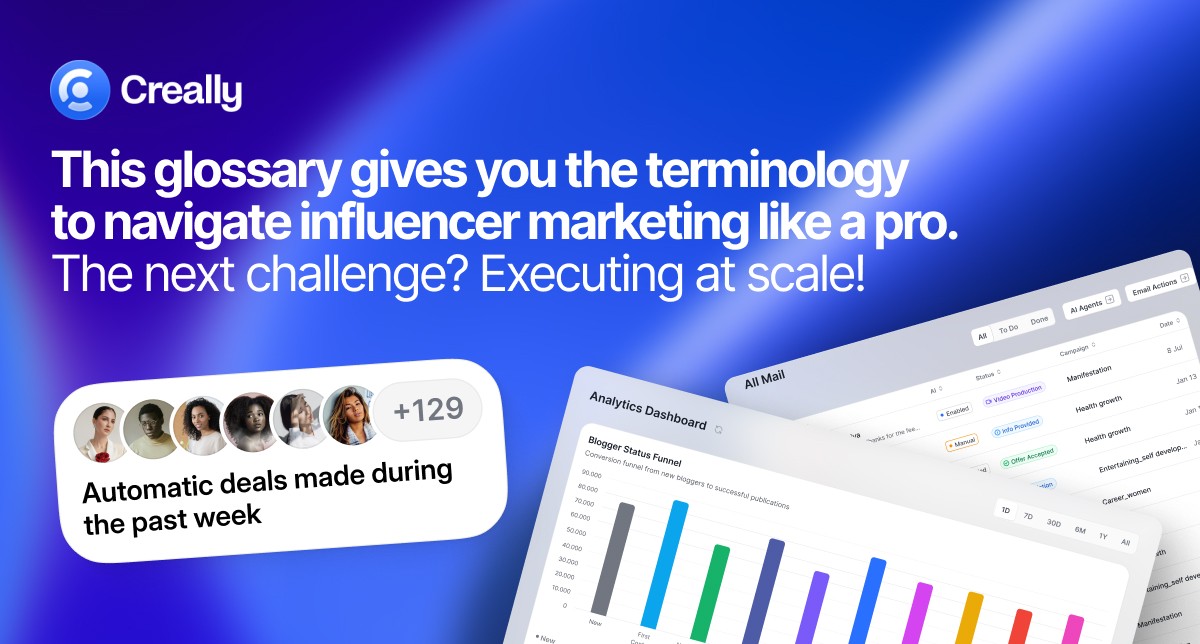
Creally runs the full workflow, from creator discovery to signed partnerships. Our AI teammate handles outreach and negotiations, filling your pipeline so you can focus on briefs, content, and performance. Teams scale creator partnerships up to 4x without adding headcount or overhead.
Creally isn’t another database or analytics tool. It’s built for teams already investing in influencer marketing who need it to run faster and cleaner.


